Why Getting 7–9 Hours of Sleep Is So Important
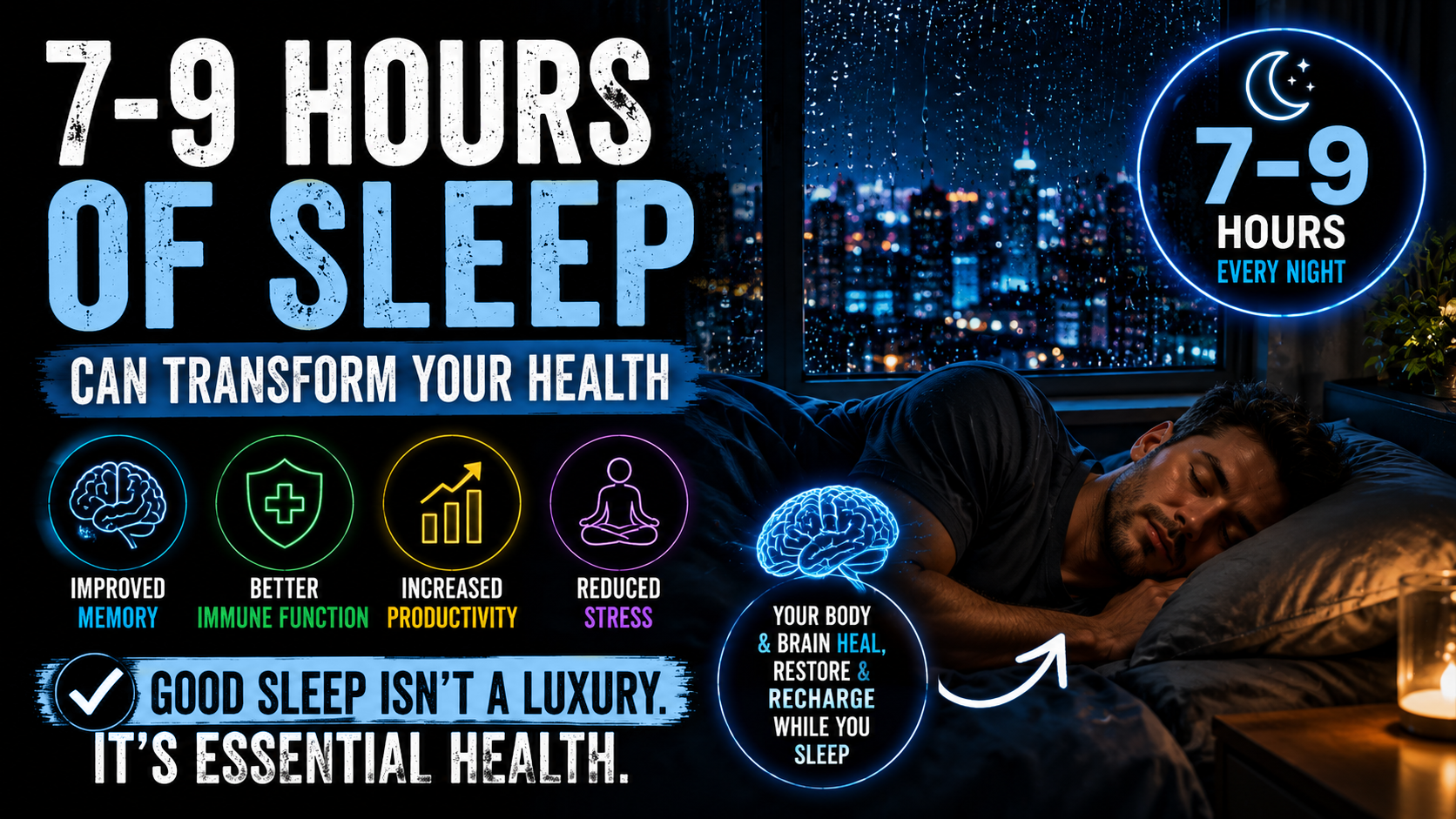
Getting enough sleep is one of the most important things we can do for both our physical and mental health. Research has consistently shown that regularly getting between 7–9 hours of sleep per night can have a major impact on memory, mood, immune function, focus, and overall well-being.
Good sleep isn’t just about feeling rested the next day. While we sleep, the brain and body are actively working to repair, recover, and reset for the day ahead. Scientists have found that healthy sleep plays an important role in learning, emotional regulation, hormone balance, and even long-term heart health.
Some of the biggest benefits linked to consistent healthy sleep include:
Improved memory and concentration
Better immune system function
Increased productivity and focus
Reduced stress and anxiety
Improved mood and emotional balance
Better physical recovery and energy levels
During deep sleep, the brain processes information and helps strengthen memory pathways. At the same time, the body releases hormones that support tissue repair, muscle recovery, and immune system function. Poor sleep over long periods of time has been linked to increased stress, lower concentration, fatigue, and higher risks for certain health conditions.
For many people, relaxing sounds like rain ambience, thunderstorms, white noise, and distant street traffic can help create a calmer environment for falling asleep. The steady, consistent nature of these sounds can help mask distractions and create a peaceful nighttime atmosphere that makes it easier to relax and unwind at the end of the day.
At Urban Windows, the goal is to create immersive urban rain ambience and calming nighttime sleep sounds designed to help people relax, focus, and fall asleep more easily. Whether it’s rain on windows, distant thunder, or soft city traffic at night, there’s something incredibly calming about falling asleep to the sound of weather outside while staying warm and comfortable indoors.
I usually get 6 hours of sleep per night. How many hours of sleep do you usually get each night?