The Real Dangers of Recording Audio & Video During Thunderstorms
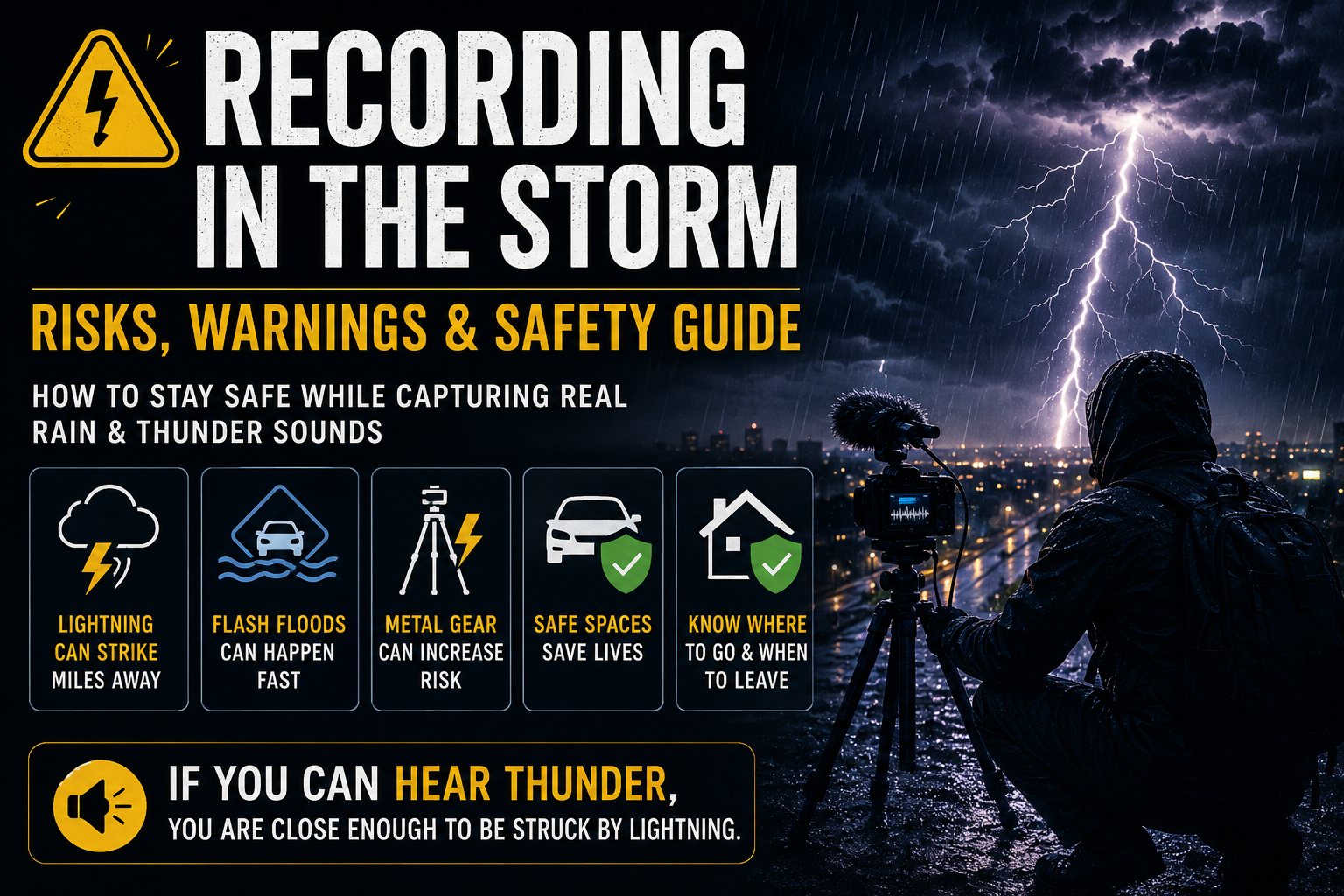
A Safety Guide for Storm Chasers, Sound Recordists, and Content Creators
Thunderstorms create some of the most immersive and atmospheric audio in the world. The deep rumble of thunder, rain hitting city streets, distant sirens, wind through buildings, and flashes of lightning can create unforgettable recordings for ambience videos, sleep sounds, documentaries, and cinematic content. But storms are not just visually dramatic, they are genuinely dangerous too. At Urban Windows, only real rain and thunder sounds are used in the sleep videos. That means sometimes stepping outside into difficult weather conditions to capture authentic storm ambience. While storm recording can be rewarding creatively, it also comes with serious risks that should never be underestimated.
This guide was created as an informational safety package for anyone interested in recording audio or video during thunderstorms or heavy rain. I know it’s probably pretty boring and basic and you don’t want to read it but chance always favors the prepared mind 🧠 so you might as well arm yourself with some knowledge before heading out to make a recording.
Table of Contents
Why Thunderstorms Are Dangerous
Lightning is one of the most powerful natural forces on Earth. A single lightning strike can heat the surrounding air to temperatures hotter than the surface of the Sun, roughly 30,000°C (54,000°F). The rapid heating of air creates the shockwave we hear as thunder. ⛈️ Many people assume lightning only strikes directly beneath storm clouds, but lightning can travel surprisingly long distances from the core of a storm. People are injured every year because they underestimate how far a strike can reach. The most important rule is simple:
If You Can Hear Thunder, You Are Close Enough To Be Struck By Lightning.
That means the danger begins long before rain starts falling directly overhead.
A lightning safety infographic showing the dangers of thunderstorms, including lightning strike risks, warning signs, safe shelter locations, and safety tips for people recording storms or spending time outdoors during severe weather.
The Hidden Risks of Recording Storm Audio
Recording thunderstorms can expose creators to hazards that casual observers may not think about.
Common risks include:
Lightning strikes
Ground current from nearby strikes
Flash flooding
Slippery surfaces
Falling branches or debris
Reduced visibility for drivers
Electrical hazards from wet equipment
Hypothermia from prolonged exposure
Wind-blown debris
Traffic accidents during low visibility conditions
Many storm recordists focus heavily on capturing dramatic footage while unintentionally ignoring changing conditions around them. The goal should never be “getting the shot at any cost.” No recording is worth risking your life. Keep your eyes focused on what you’re doing and keep your other senses aware of your surroundings.
⚡Lightning Safety Basics
Lightning can injure or kill a person instantly. A strike can affect:
The heart and cardiac rhythm
The nervous system
Hearing and vision
Muscles and bones
Memory and cognitive function
Even survivors can experience long-term neurological symptoms.
Ways Lightning Can Injure You
1. Direct Strike
Lightning directly hits the person.
2. Ground Current
Electricity spreads through the ground after a nearby strike and enters the body through the feet.
3. Side Flash
Lightning jumps from a nearby object (such as a tree or pole) to a person.
4. Contact Injury
Electricity travels through metal objects being touched, including tripods, fences, railings, or camera rigs.
5. Blast Effects
The explosive shockwave from lightning can throw a person or damage hearing.
What about Rubber boots?
Although some people believe rubber boots can protect them from lightning, they should never be relied on as real lightning protection. While rubber may provide a small amount of insulation under certain conditions, lightning carries enormous electrical energy that can travel through wet ground, puddles, moisture, and surrounding objects during a nearby strike. In storm conditions, rain, mud, and soaked clothing greatly reduce any insulating effect. Rubber boots may help keep your feet dry and improve traction on slippery surfaces, but the safest protection from lightning is always proper shelter inside a substantial building or fully enclosed vehicle.
Warning Signs You Need to Leave Immediately
If any of the following occur, it is time to stop recording and move to safety immediately:
You hear thunder
Lightning becomes more frequent
Hair stands up on your body
You hear buzzing or crackling sounds
Static electricity is noticeable
Metal equipment begins humming
Rain intensity rapidly increases
Strong wind gusts arrive suddenly
Visibility becomes poor
Water begins pooling rapidly
WARNING!
⚡ Hair standing up or buzzing sounds can indicate an imminent lightning strike. If this happens:
Drop metal equipment immediately
Move away from tall objects
Get into a substantial building or enclosed vehicle
Here is some bad advice from me that you should not follow. When I’m recording a thunderstorm outside in the city I’ll be in the vicinity of a tall building. Something like an apartment building or skyscraper. Keep in mind there is no such thing as a sure thing when it comes to lighting strikes but lightning usually strikes the tallest structure around. Something like an apartment building. If i’m recording a thunderstorm in the city i’m always around a tall building. If I was in the suburbs with nothing but homes around me I would not stay outside and if I was out in nature I would find shelter. BUT do not stand under trees or poles that could attract lighting.
Dangerous Places to Avoid During Storms
Some locations dramatically increase the risk of injury during thunderstorms.
Avoid:
Open fields
Hilltops
Isolated trees
Metal fences and railings
Shorelines and beaches
Rooftops
Open parking lots
Power lines and utility poles
Flood-prone streets
Standing water
Water and metal are both highly dangerous during lightning events. Tripods, boom poles, light stands, and metal camera rigs can also increase risk exposure.
Safer Places to Record From
The safest storm recordings are usually captured from protected locations.
Safer Options Include:
Inside substantial buildings
Inside fully enclosed vehicles
Covered balconies with proper shelter
Interior rooms with open windows nearby
Parking garages
You can even setup a small recorder someplace outside and leave it recording while you go inside.
Many professional ambience recordings are captured safely from protected environments rather than exposed outdoor locations. A dramatic storm soundtrack does not require standing directly underneath lightning.
The Risks of Heavy Rain Beyond Lightning
Lightning is not the only danger during storms. Heavy rain can create serious hazards including:
Flash Flooding
Roads can flood rapidly with little warning. Even shallow moving water can:
Knock a person off balance
Stall vehicles
Hide open drains or potholes
Reduced Visibility
Heavy rain dramatically reduces visibility for both pedestrians and drivers. This becomes especially dangerous near:
Intersections
Highways
Parking lots
Crosswalks
Slippery Surfaces
Wet pavement, rooftops, rocks, and stairways become extremely hazardous when carrying expensive equipment. One fall while distracted by filming can lead to injury.
Camera & Audio Equipment Hazards
Storm recording gear can unintentionally create additional risks.
Common Equipment Dangers
Metal Tripods
Tripods can conduct electricity during nearby strikes.
Headphones
Wearing isolating headphones can prevent you from hearing warning signs around you. I primarily use wired earbuds when recording on the street. It helps me pay attention to what’s going on around me.
Water Damage
Rain can destroy:
Audio recorders
Microphones
Batteries
Cameras
Power systems
Make sure you know what the water tolerance is for the gear that you use. If you’re recording with a smartphone or pro camera they are probably waterproof. Mics can be waterproof depending on the mic. I usually head out with an umbrella. If the rain is heavy you can hear it hitting the umbrella. But, hey that just makes it feel more authentic.
🎯 Pro TIp:
I always keep a clear garbage bag in my camera bag. If the rain gets too heavy and the winds get wild I just toss my whole backpack in the garbage bag and i’m good to go. A clear garbage bag is good because you can check batters and gear in the garbage bag without having to use a flash light. I was shooting a wedding on a tropical beach once and that garbage bag saved my kit. Trust me this is good advice.
Cable Hazards
Wet extension cords and exposed power systems can become dangerous electrical hazards.
Vehicle Safety During Storm Recording
Vehicles can provide good protection during lightning storms, but only if used properly.
Safer Vehicle Practices
Stay inside the vehicle
Keep windows closed
Avoid touching metal surfaces
Park away from trees and poles
Avoid flooded roads
A fully enclosed metal vehicle acts somewhat like a Faraday cage, helping redirect electrical energy around occupants during a lightning strike.
However:
Convertibles are NOT safe
Open-sided shelters are NOT safe
Standing beside a vehicle is NOT safe
Emergency Response If Someone Is Struck by Lightning
Lightning strike victims can survive with rapid medical attention.
Important:
A person struck by lightning does NOT carry electrical charge afterward. It is safe to touch and assist them.
Call Emergency Services Immediately!
Possible symptoms include:
Cardiac arrest
Difficulty breathing
Burns
Confusion
Memory loss
Hearing loss
Loss of consciousness
If trained:
Begin CPR immediately if needed
Use an AED if available
Fast medical response can save lives.
Recommended Storm Recording Safety Practices
Before Recording
Check weather radar
Monitor storm movement
Tell someone where you are going
Bring waterproof clothing
Use weather-sealed gear when possible
Bring a clear garbage bag or two
Plan escape routes
During Recording
Stay aware of surroundings
Avoid isolated locations
Do not stand near tall objects
Keep equipment minimal
Leave immediately if conditions worsen
After Recording
Dry equipment thoroughly
Inspect batteries and cables
Watch for delayed flooding
Avoid driving through standing water
Final Thoughts
Storm ambience can be beautiful, immersive, cinematic, and emotionally calming for listeners. I personally love being out there during storms. Have you ever see those shows about the Alaskan crab fisherman out there on the Bering Sea with the wind and the rain. Sign me up for that any day of the week I love it. When the weather goes sideways i’m the first one out the door but I have experience working in bad weather. If you’re new to recording storms please take the warnings in this post seriously. trust your instincts. If something doesn’t feel safe or you get that gut feeling telling you it’s time to go than listen to your gut.
Storms are powerful natural events that deserve respect. My goal is always to capture authentic real-world atmosphere while staying aware of the risks involved. Anyone considering recording thunderstorms or heavy rain should prioritize safety above content creation. The best recording is the one you survive to share on YouTube. lol
When thunder roars:
Go indoors.
Frequently Asked Questions
Is it safe to record thunderstorms outside?
Recording outside during thunderstorms is inherently risky. Lightning can strike far from the center of a storm. Safer recordings are usually captured from sheltered or enclosed locations.
How far away can lightning strike from a storm?
Lightning can strike several miles away from the main storm cloud. If you can hear thunder, you are already within strike range.
Are tripods dangerous during lightning storms?
Metal tripods can conduct electricity and may increase danger during nearby lightning activity.
Is it safer to record storms from inside a car?
A fully enclosed metal vehicle provides significantly better protection than standing outdoors. Windows should remain closed.
Can lightning strike without rain?
Yes. “Bolts from the blue” can occur far away from rainfall areas.
Is heavy rain dangerous even without lightning?
Yes. Heavy rain can cause flooding, traffic accidents, slippery surfaces, falling debris, and reduced visibility.
What should I do if my hair stands up during a storm?
Drop your umbrella and any metal objects and RUN! This may indicate an imminent lightning strike. Move to shelter immediately and avoid touching metal objects.
Can people survive lightning strikes?
Yes. Many people survive lightning strikes, especially with immediate emergency medical treatment and CPR.
What is the safest place during a thunderstorm?
The safest places are:
Substantial buildings
Fully enclosed metal vehicles
Avoid open shelters, tents, trees, and open areas.
Should creators risk storms for better content?
No piece of content is worth serious injury or death. Professional storm creators prioritize planning, safety, shelter access, and risk awareness before recording.
Hope you all found this post helpful. I think I covered all the bases. if I missed something let me know in the comments.